Claude Code for PMs: practical guide
I am a bit late with the Claude topic, but for a good reason - I first wanted to ensure it is useful for the real PM job. It turns out, it is, so let's dive in.

Why all the buzz
Modern LLM tooling passed three stages of evolution:
Smart chats: first OpenAI’s ChatGPT, then Google Gemini, then Anthropic’s Claude, and others. You can ask about anything and get a (usually correct) answer. The problem is that these chats lacked context for your work and could not take any action beyond chatting. For example, ‘Give 3 new ideas for Spotify podcast product’ followed by (often vague) response from the LLM.
Coding agents: code is just text, and there’s so much training data (e.g., all the public coding repositories), so LLMs ended up being exceptionally useful for coding tasks. Especially for surface-level prototyping (only the front end), which covers 90% of our needs as product managers. It is here that coding agents like Lovable, Replit, Bolt, v0, etc., have become well-known. Their limitation is that they build code from scratch and in isolation from the existing company code. Interestingly, this is also their advantage: if you want to launch a pet project for an external audience, you can do it with Replit in a single evening.
Embedded agents: These work with real data and company systems and can read and use them. These include Claude (via MCP and connectors), ChatGPT (with connectors), and Glean.
I want you to pause and deeply feel the power of this statement:
The agent can autonomously decide what it needs
Then reach hundreds of systems and data sources across your company, either to just read data (e.g., code, Jira sprints, or data tables)
or more: adjust it (e.g., write new code, create a new Jira ticket, etc).
This can happen in a sequence the agent defines: it can start with web search, then code search, then check some existing documents, then do another code search, then execute a database query, etc., all autonomously with the goal of solving the task you set.
This is magic, comparable to Harry Potter’s.
What does it mean for product managers: examples
I’ll give you a few specific examples of what Claude can do. Once you understand them, you’ll be able to come up with the other 100 ways to use Claude for your own tasks:
Example 1: Check whether a specific feature actually exists in the code
Instead of asking developers, you can just… ask Claude. Below is an example of such a question about a real Energy Tracking app code that Claude Code has access to. I just ask it in plain English (you can also use your native language); it runs the code search for me and gives me the answer: the feature does not exist. 30 seconds!
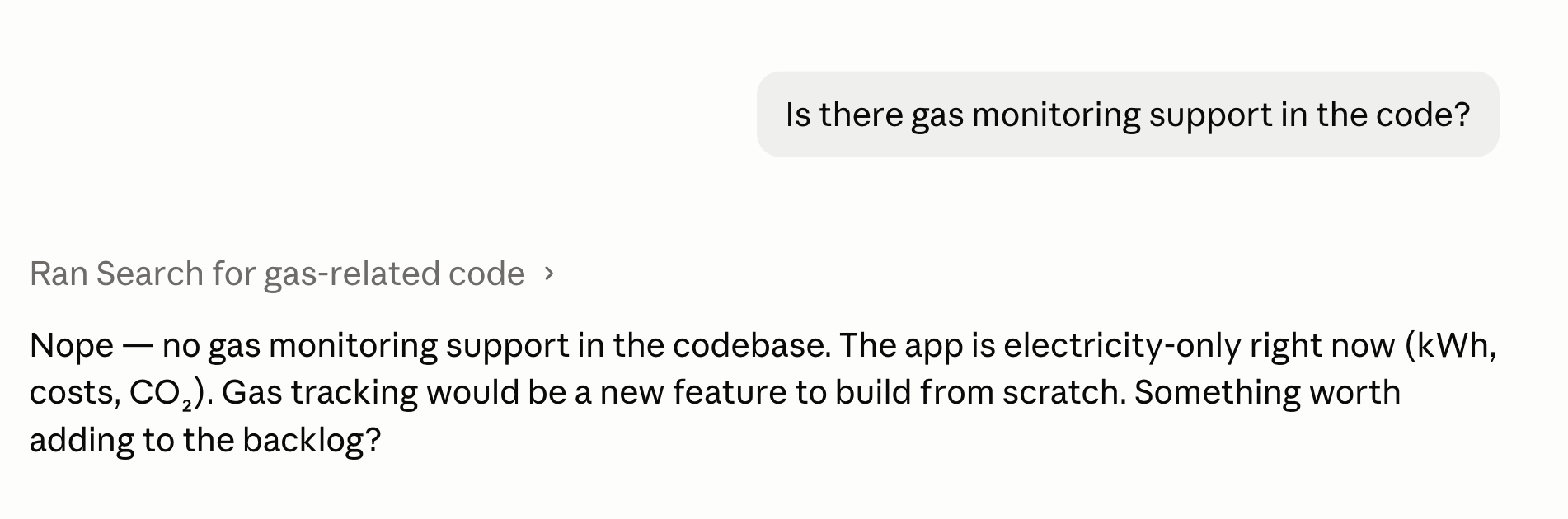
In the same way, you can check whether what is “Done” in Jira is actually done in code, or create business updates for leadership without bothering anyone: just ask Claude to check what’s really implemented and create a summary.
Example 2: Vibe-code a feature on top of the existing codebase
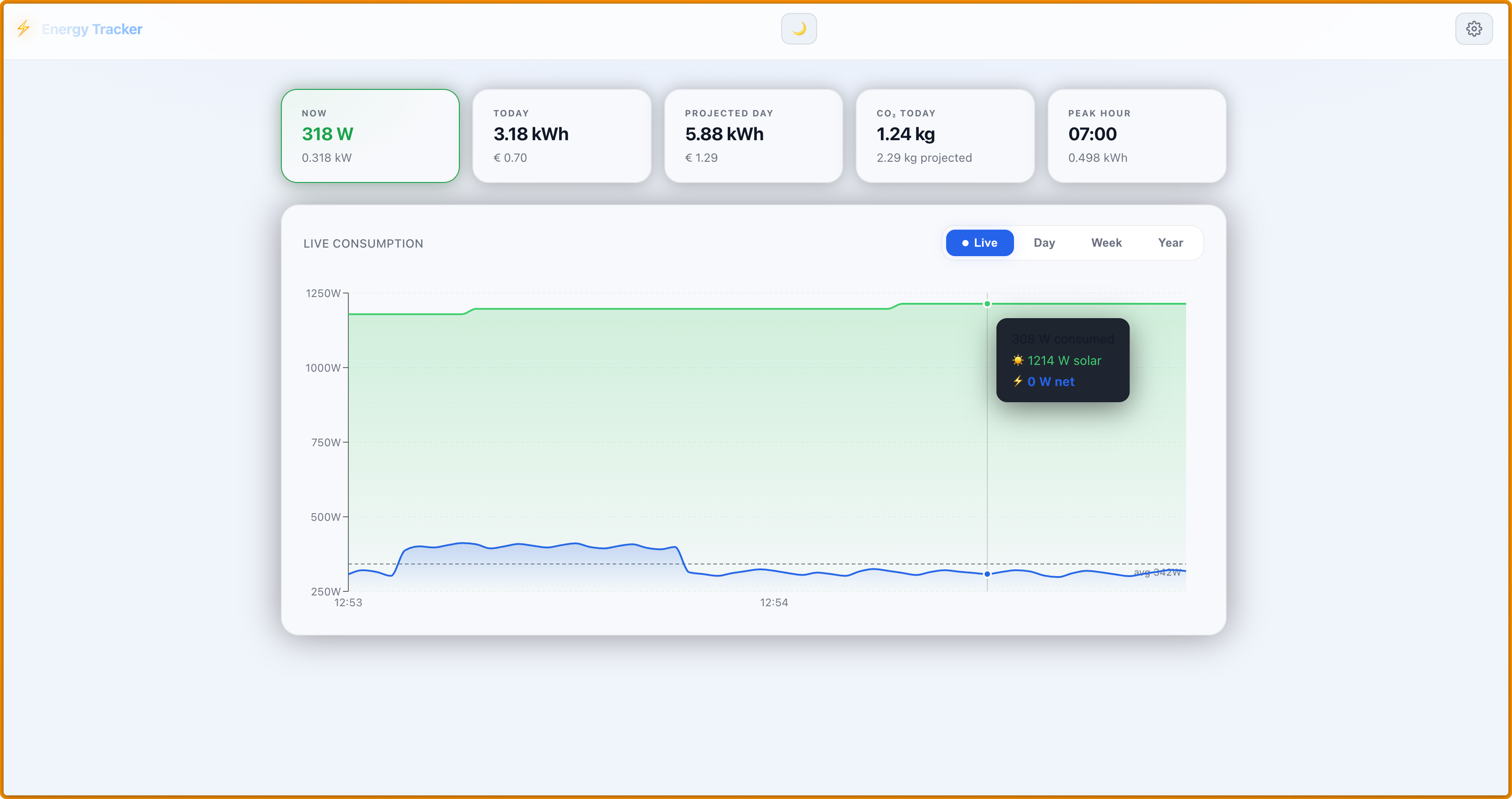
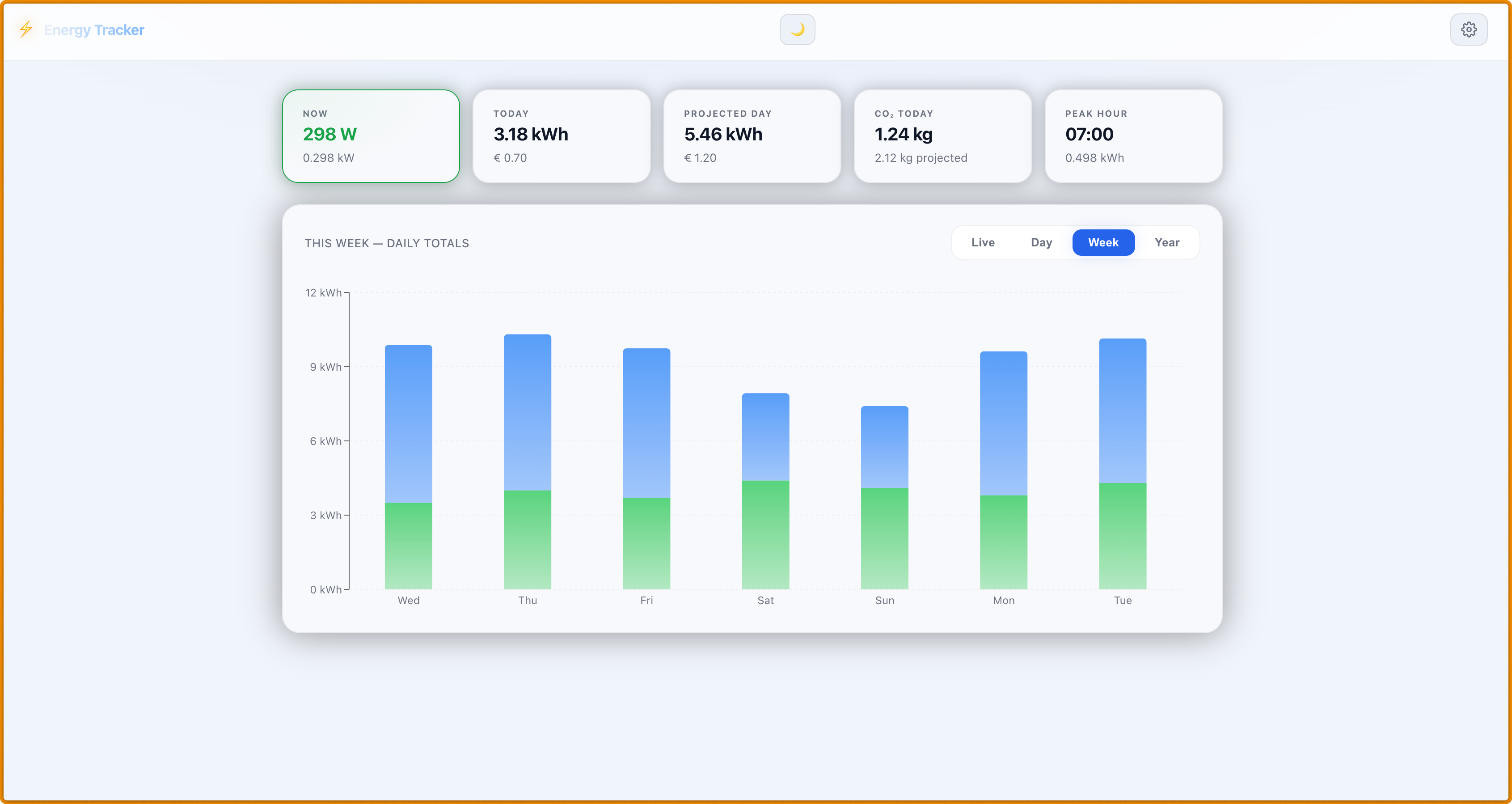
These days, if you have an idea, you have the luxury to materialize it right away by creating a UI prototype. For example, in the same Energy Tracking app, you might want to add not only energy consumption but also energy generation (e.g., from solar panels). In 10 minutes, you will have something like this (the blue line is consumption, the green is generation).
Of course, you still need to build it for real, but this allows you to quickly gauge its usefulness, conduct mini user research, and make your PRD more concrete with these visuals.
Example 3: Get a summary of how the Jira sprint is going and why it’s blocked
Because Claude can connect to your Jira, you can ask it questions about your backlog and sprints. And if you allow, Claude can even adjust it! Below, I ask Claude to provide the sprint summary and explain why one ticket is blocked. Again, in 20 seconds, I get a clear call to action - a developer is waiting on my decision.
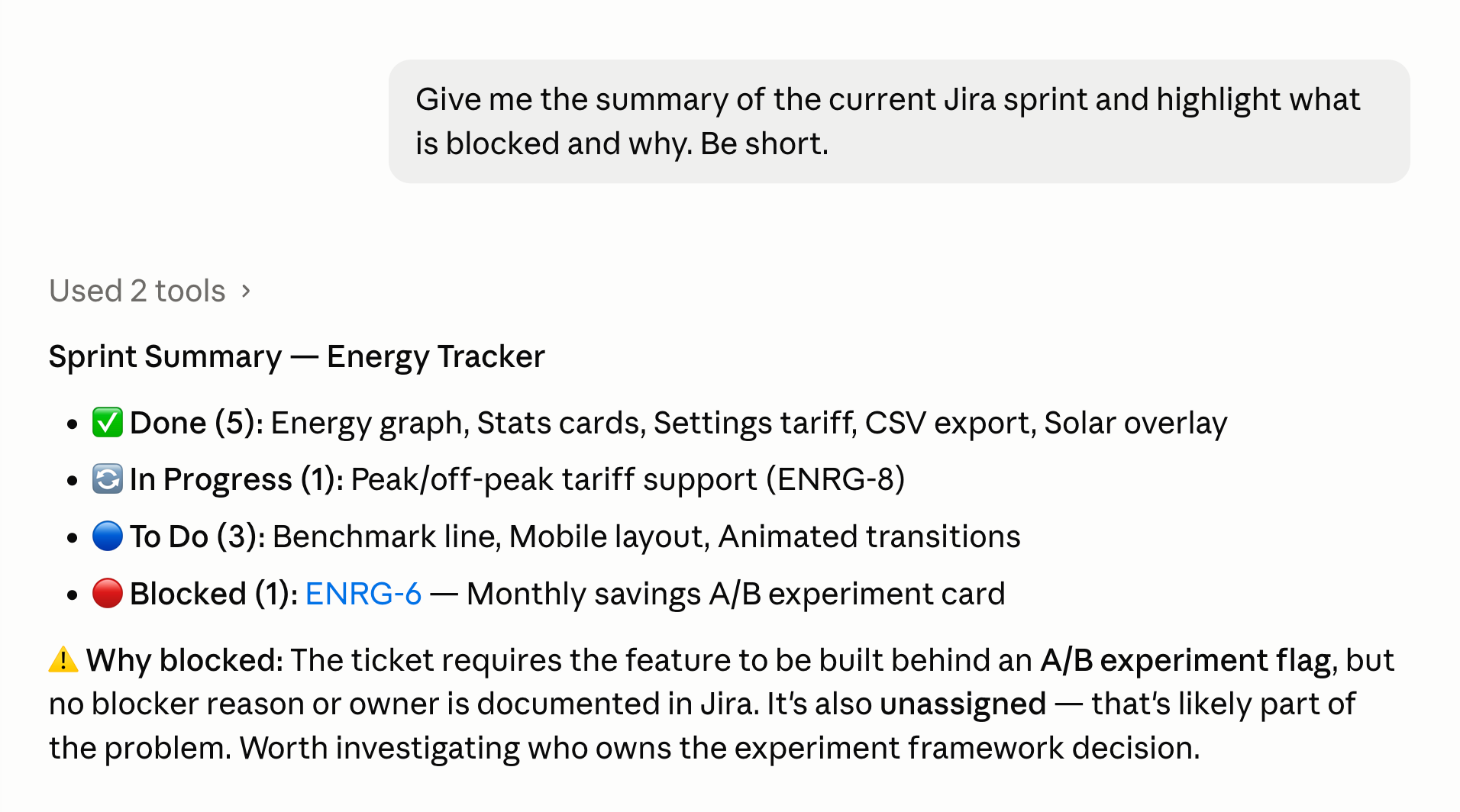
Possibilities are endless: I can ask any questions on my backlog. For example, are there any duplicates? Is there anything we've already implemented in code that still sits in the backlog? If yes, some cleanup is needed!
And other cool things Claude can do for PMs
Pull data from a database: for example, you can ask it to query monthly sales stats, and it will generate the right SQL query and get the answer for you. Some also use it to find specific examples in the free-text tables, e.g., customer reviews. For example, "Find where a client mentions XXX".
Work with Slack messages. I used it from time to time to check the instances where I promised something and never followed up. It reads 100s of my channels and pops up the ones I need to come back to a person. Handy!
Note that all the above examples can be combined into a “skill”: when analyzing why the Jira sprint is stuck, Claude can (a) check Jira, (b) check the codebase, and (c) read Slack to give you a weighted answer based on 3 sources. Then you can package it as a “shortcut” command (e.g., “/standup”) and run it as preparation before daily stand-ups.
Claude won’t take your job (yet). But it automates enough product busywork that you can focus on the real stuff - decisions, strategy, and complaining about coffee quality.
How the magic works
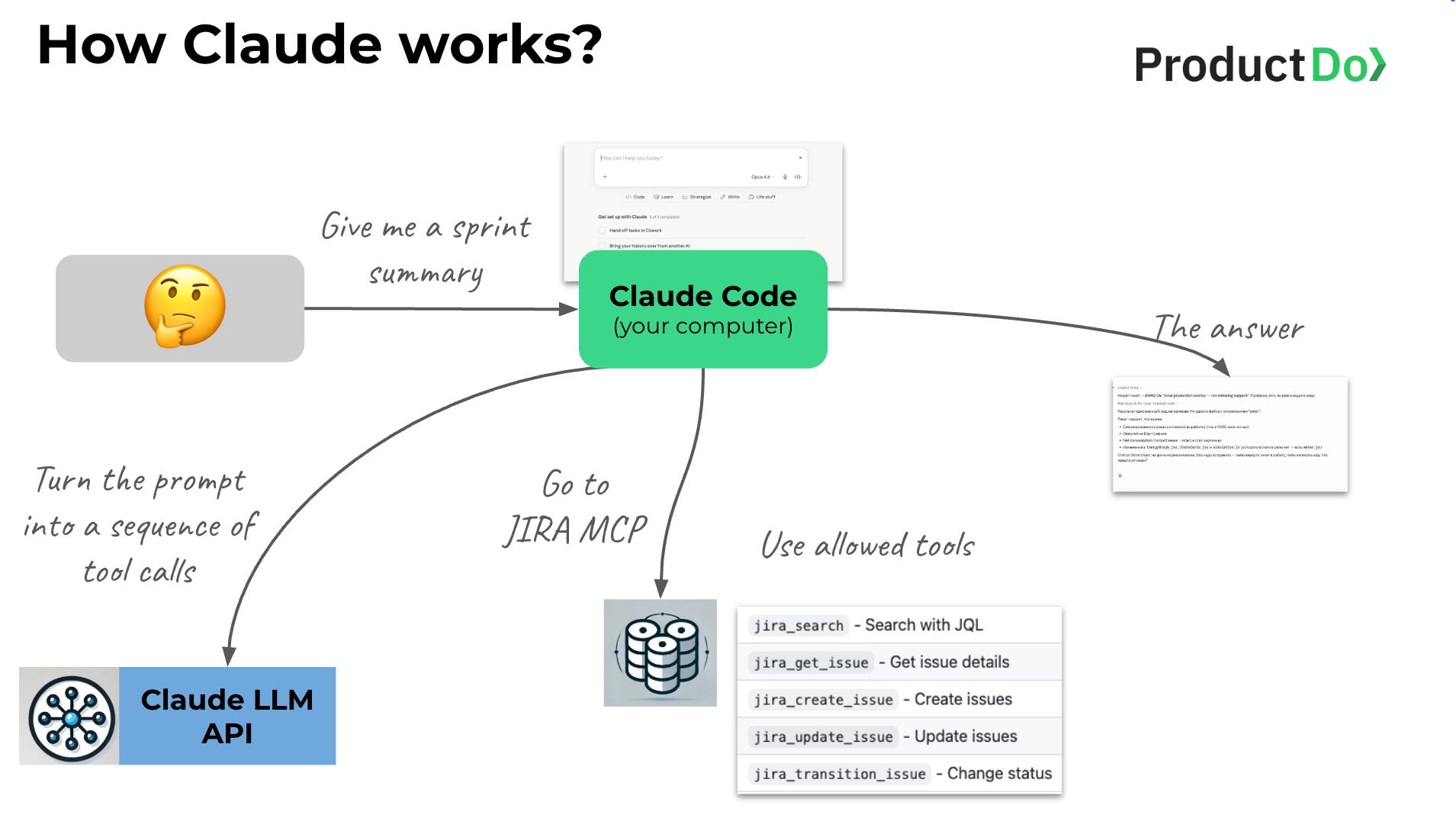
Thanks to two core conceptions: MCP and tools. Let’s take a concrete example: Jira.
Claude is connected to Jira directly via MCP (Model Context Protocol). Simply put, the main idea of MCP is this: any AI agent on the planet knows that any service with an MCP (Jira, Google Maps, Stripe, Notion, etc.) can be asked two questions: “What tools do you support (with a description)” and “Call tool X”. For service developers, wrapping their APIs (in this case Jira APIs) in MCPs is a very simple task, but the benefit lies in the unified agreement: they describe the MCP, and suddenly every agent can ask what their service can do and then, if this is what an agent looks for, call it (often for a fee).
In the case of Jira, its developers defined a set of tools, such as “create issue,” “find ticket,” and “update status.” An agent (Claude) connects to this MCP server and sees this list with an explanation of what each tool does. The magic revealed: the agent understands text (tool descriptions), so it then decides which tool to call and when. And when the tool returned the response (text), it again knows how to process it.
How to master Claude Code
Wouldn’t it be cool if one let PMs learn Claude on a full simulated startup: a working codebase for an energy-tracking app, a real Jira, a database full of app stats, and a Confluence stuffed with PRDs and strategies? So you could practice in an environment that actually looks like your job?
Well, this is exactly what the other 3 Lead PMs and I created.
I’m genuinely proud of how the learning turned out: pilot students called it “to the point”, “motivating”, “hands-on”, and “one of the few courses that’s immediately applicable”.
You can check real reviews and the program, and get it with a limited Earlybird 40%-off discount here.
Enjoy!
This article was originally published in the ProductDo Knowledge base.